Core Web Vitals: a better way to think about site speed
Fast pages feel more dependable. Learn which loading and interaction signals matter and what to improve first.
Speed is part of the experience
Visitors notice when a page shifts while they are reading or when a button takes too long to respond. Performance is not only a score; it is the feeling that a site is ready when someone needs it.
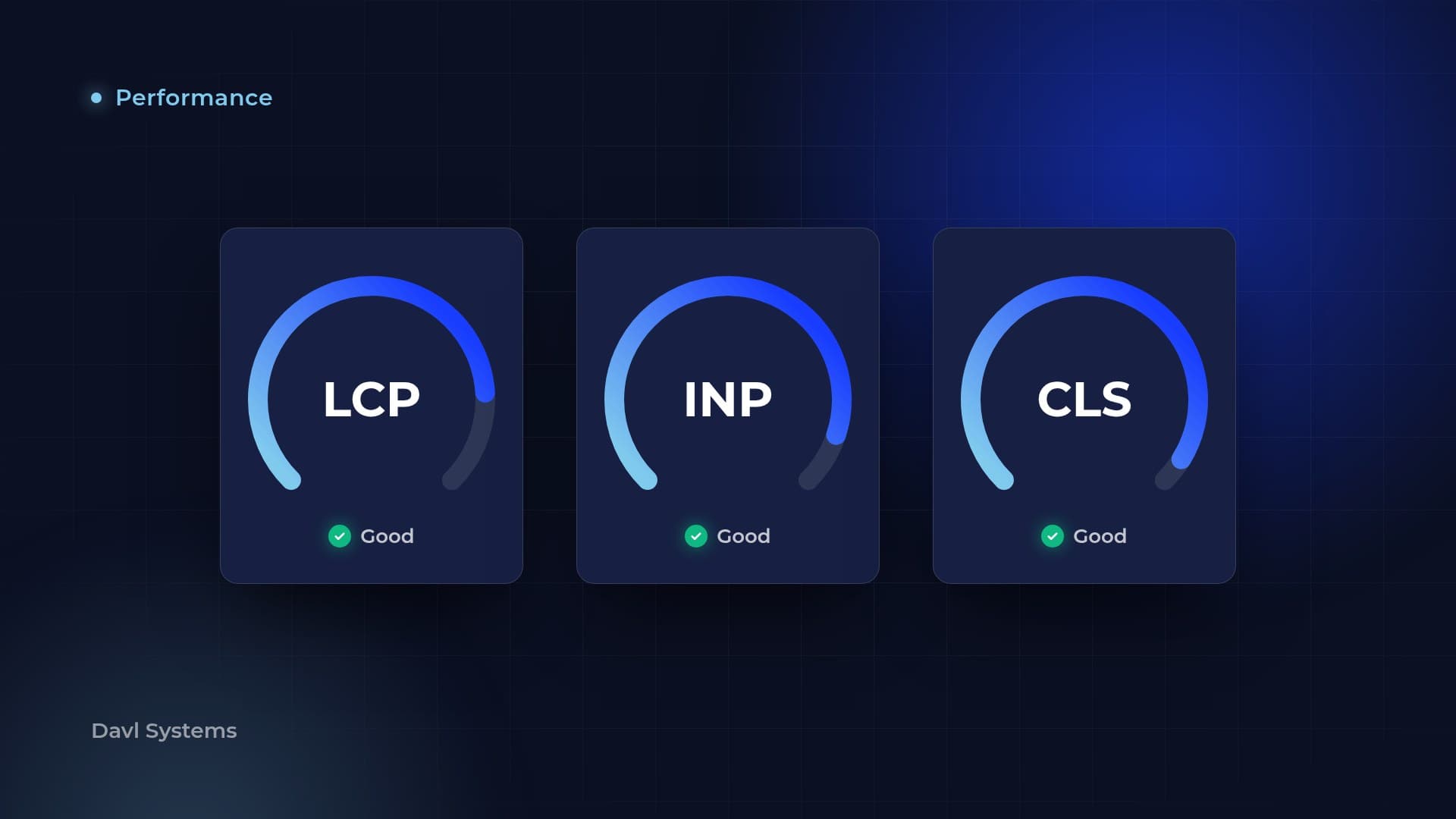
Core Web Vitals help teams measure loading, responsiveness, and visual stability using signals grounded in real browsing behavior.
Fix the largest causes first
Large images are a common source of slow loading. Serve the right dimensions, choose an efficient format, and avoid loading images that are far below the fold before they are needed.
Too much client-side JavaScript can also delay interaction. Keep pages server-rendered where possible and add interactive code only where it improves the task a visitor is trying to complete.
Measure again on real devices
A fast development laptop does not represent every customer. Review field data when it is available and test important pages under slower network and device conditions.
Make improvements in small steps and measure the result. That keeps performance work tied to a real benefit rather than a chase for a perfect lab score.